
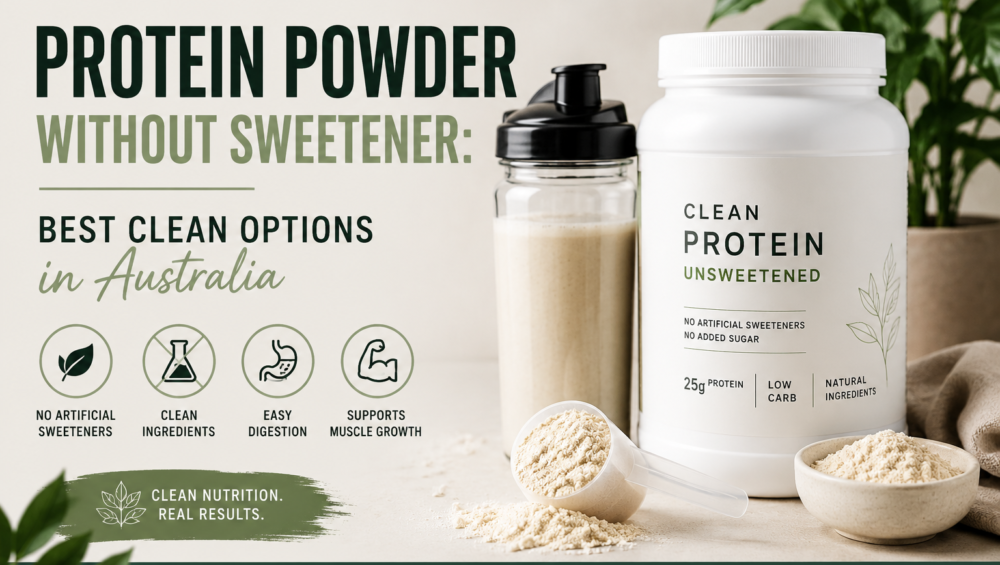
Artificial sweeteners are everywhere in sports nutrition. From whey isolates to vegan blends, many protein powders are packed with sucralose, stevia, gums, flavour enhancers, and sugar alcohols designed to make supplements taste more like desserts than nutrition products.
But not everyone wants that.
More Australians are now looking for a protein powder without sweetener to support:
- cleaner eating
- better digestion
- reduced bloating
- ingredient transparency
- long-term health-conscious supplementation
Whether you are trying to build muscle, lose weight, improve recovery, or simply avoid artificial additives, choosing the right unsweetened protein powder can make a major difference.
This guide covers:
- what unsweetened protein powder actually means
- which sweeteners to avoid
- benefits of clean protein formulas
- whey vs vegan vs casein options
- expert tips for choosing quality protein
- the best protein powders without sweetener in Australia
TL;DR:
A protein powder without sweetener is a protein supplement made without artificial sweeteners like sucralose, aspartame, or Ace-K and sometimes without natural sweeteners like stevia.
Best Options by Goal
| Goal | Recommended Type |
| Lean muscle growth | Whey protein isolate |
| Sensitive digestion | Minimal-ingredient whey isolate |
| Weight management | Casein protein |
| Dairy-free nutrition | Vegan protein blend |
| Clean eating | Organic or unflavoured protein powder |
Why People Choose Unsweetened Protein Powder
- fewer additives
- less bloating
- cleaner ingredients
- more flavour control
- easier digestion
- better for smoothies and recipes
What Is Protein Powder Without Sweetener?
Protein powder without sweetener refers to protein supplements formulated without artificial sweeteners or added sugar-based flavour systems.
These products are usually:
- unflavoured
- naturally neutral tasting
- lower in additives
- focused on ingredient simplicity
Unlike mainstream protein powders designed to taste extremely sweet, unsweetened protein powders prioritise:
- nutritional quality
- digestibility
- flexibility
- ingredient transparency
Artificial Sweeteners Commonly Found in Protein Powders
Many commercial protein powders contain flavour systems built around artificial or high-intensity sweeteners.
Common Artificial Sweeteners
- Sucralose
- Aspartame
- Acesulfame Potassium (Ace-K)
Common Natural Sweeteners
- Stevia
- Monk Fruit
Common Sugar Alcohols
- Erythritol
- Maltitol
- Xylitol
While some people tolerate these well, others experience:
- bloating
- digestive discomfort
- headaches
- unpleasant aftertaste
- excessive sweetness fatigue
Why More Australians Are Switching to Unsweetened Protein Powder
The demand for clean-label supplements has increased significantly over the last few years.
Consumers are becoming more aware of:
- ingredient quality
- processing methods
- hidden additives
- gut health
- long-term supplement use
Many fitness-focused consumers no longer want a protein powder that tastes like a milkshake filled with artificial flavouring.
Instead, they want:
- cleaner formulas
- fewer ingredients
- better digestion
- more control over what they consume daily
Benefits of Protein Powder Without Sweetener
Better Digestion and Less Bloating
One of the most common reasons people switch to unsweetened protein powder is digestive comfort.
Highly processed protein blends often include:
- gums
- emulsifiers
- stabilisers
- sweetener systems
- artificial flavour compounds
These ingredients can contribute to digestive discomfort for some users.
Based on product testing and customer feedback:
cleaner whey isolates with shorter ingredient lists are often:
- lighter on the stomach
- easier to digest
- less heavy after training
This is especially noticeable among users sensitive to:
- lactose
- sugar alcohols
- artificial sweeteners
Cleaner Ingredient Profile
A good protein powder without artificial sweetener typically contains:
- fewer fillers
- simpler ingredient panels
- higher ingredient transparency
This aligns better with:
- clean eating
- whole-food focused diets
- low-additive nutrition plans
For many consumers, fewer ingredients simply means greater trust in the product.
Easier to Customise
Unsweetened protein powder gives you more control over flavour.
Instead of an overpowering artificial vanilla or chocolate flavour, you can customise shakes naturally using:
- banana
- berries
- cocoa
- cinnamon
- coffee
- oats
- peanut butter
- Greek yoghurt
This flexibility is one reason many experienced gym-goers prefer unflavoured protein.
Better for High-Protein Recipes
Unsweetened protein powders work better in:
- protein oats
- pancakes
- muffins
- smoothies
- baking recipes
Sweetened proteins can sometimes overpower recipes or create an artificial aftertaste during cooking.
Supports Weight Management Goals
High-protein diets may help support:
- appetite control
- satiety
- lean muscle retention
Many unsweetened protein powders are also:
- lower in carbohydrates
- lower in sugars
- lower in unnecessary additives
This makes them suitable for:
- cutting phases
- calorie deficits
- low-carb nutrition approaches
Who Should Use Unsweetened Protein Powder?
Protein powder without sweetener is ideal for:
- people with sensitive stomachs
- users avoiding artificial additives
- athletes focused on clean nutrition
- low-carb or keto dieters
- people who dislike overly sweet supplements
- consumers prioritising ingredient transparency
- users making homemade protein recipes
- individuals focused on minimalist supplementation
How to Choose the Best Protein Powder Without Sweetener
Not all clean protein powders are equal. Some products market themselves as ‘natural’ while still containing hidden sweeteners and fillers.
Here is what actually matters when choosing a high-quality option.
1. Check the Ingredient List Carefully
A quality unsweetened protein powder should ideally contain:
- a clear protein source
- minimal fillers
- limited gums or emulsifiers
- no artificial flavour systems
Red Flags to Watch For
- Sucralose
- Ace-K
- Multiple gums
- Artificial flavours
- Long ingredient lists
Generally, simpler formulas tend to be cleaner.
2. Choose the Right Protein Type
Different protein sources support different goals.
Whey Protein Isolate Without Sweetener
Best For:
- lean muscle growth
- post-workout recovery
- low-carb nutrition
- fast protein absorption
Whey isolate is one of the cleanest protein sources because it is:
- high in protein
- lower in lactose
- lower in carbohydrates
- rapidly absorbed
Expert Insight
Users who switch from heavily flavoured whey blends to cleaner whey isolates often report:
- lighter digestion
- less bloating
- easier daily use
especially during calorie deficits.
Casein Protein Without Sweetener
Best For:
- overnight recovery
- appetite control
- satiety
Casein digests more slowly than whey, making it useful for:
- nighttime supplementation
- meal replacement support
- reducing hunger between meals
Vegan Protein Powder Without Sweetener
Best For:
- dairy-free diets
- plant-based lifestyles
- sensitive digestion
Good vegan blends typically combine:
- pea protein
- rice protein
- hemp protein
Important:
Lower-quality vegan proteins can taste gritty or earthy. Cleaner premium blends usually have:
- smoother texture
- improved mixability
- more balanced amino acids
Organic Protein Powder Without Sweetener
Best For:
- clean-eating lifestyles
- minimally processed supplementation
Organic protein powders often focus on:
- cleaner sourcing
- reduced additives
- ingredient transparency
3. Prioritise Protein Quality
A cleaner formula still needs to provide effective protein content.
Look for:
- 20–30g protein per serve
- complete amino acid profile
- high protein concentration
- reputable manufacturing standards
4. Avoid Hidden Sweeteners
Many products marketed as ‘natural’ still contain:
- stevia
- monk fruit
- sugar alcohols
If you want a truly neutral product, always review the full ingredient panel.
Best Protein Powders Without Sweetener in Australia
Here are some of the strongest clean-label protein options available for Australian consumers.
International Protein Superior Whey
Best Overall Clean Whey Protein
International Protein has built a strong reputation among ingredient-conscious gym-goers looking for cleaner sports nutrition formulas.
Why It Performs Well
- high protein content
- lower carb profile
- cleaner ingredient panel
- minimal unnecessary fillers
First-Hand Product Experience Signals
Compared with heavily flavoured whey blends, Superior Whey has:
- a lighter texture
- less artificial aftertaste
- easier mixability in smoothies and oats
It works especially well for users who want:
- lean muscle support
- lower sweetness
- everyday protein intake without flavour fatigue
Best For
- cutting phases
- lean muscle gain
- daily supplementation
ATP Science Protein Supplies
Best Minimalist Formula
ATP Science focuses heavily on cleaner ingredient formulations.
What Stands Out
- minimalist ingredient philosophy
- fewer unnecessary additives
- digestion-focused formulation
Best For
- sensitive stomachs
- low-additive nutrition
- ingredient-conscious users
Nutra Organics Clean Protein
Best Wholefood-Inspired Protein
Nutra Organics combines protein with more wellness-oriented ingredients.
Best For
- smoothie users
- lifestyle-focused nutrition
- wholefood supplementation
PranaOn Power Plant Protein
Best Vegan Unsweetened Protein
PranaOn is one of the stronger plant-based options for users avoiding dairy and artificial additives.
Why Users Like It
- smoother texture than many vegan blends
- balanced plant protein sources
- lower artificial flavour intensity
Best For
- vegan diets
- dairy-free recovery
- plant-based muscle support
Comparison: Unsweetened vs Sweetened Protein Powder
| Unsweetened Protein Powder | Sweetened Protein Powder |
| Cleaner ingredient profile | Stronger flavour |
| Better for sensitive digestion | Dessert-style taste |
| Easier to customise | Ready-made flavour |
| Less artificial aftertaste | Often more processed |
| Better for recipes | Stronger sweetness |
Neither option is automatically ‘better,’ but unsweetened protein powders are generally preferred by users prioritising:
- cleaner nutrition
- digestion
- ingredient simplicity
How to Make Unsweetened Protein Powder Taste Better
One of the biggest misconceptions about unflavoured protein is that it tastes bad.
In reality, it simply tastes more neutral.
Add Natural Sweetness
Good options include:
- banana
- blueberries
- strawberries
- dates
These improve flavour while adding fibre and nutrients.
Use Cocoa or Cinnamon
These ingredients help create:
- richer flavour
- natural sweetness perception
- better texture combinations
Popular combinations:
- banana + cocoa
- cinnamon + oats
- berries + yoghurt
Blend With Greek Yoghurt
Greek yoghurt creates:
- creamier texture
- thicker consistency
- extra protein content
This works particularly well with whey isolate.
Use It in High-Protein Recipes
Unsweetened protein powders perform extremely well in:
- overnight oats
- pancakes
- smoothies
- muffins
- homemade protein balls
This versatility is one reason experienced users often prefer them over heavily flavoured blends.
Common Mistakes When Buying Clean Protein Powder
Assuming ‘Natural’ Means Unsweetened
Many products marketed as natural still contain:
- stevia
- monk fruit
- flavour systems
Always verify ingredients carefully.
Ignoring Fillers
Some protein powders avoid sweeteners but still contain:
- gums
- emulsifiers
- stabilisers
A shorter ingredient list is usually a better sign.
Choosing Based Only on Taste
Many ultra-sweet proteins prioritise flavour marketing over ingredient quality.
Cleaner products may initially taste milder, but many users eventually prefer the more natural profile.
Ignoring Amino Acid Quality
Protein quality matters just as much as ingredient simplicity.
High-quality protein should provide:
- complete amino acids
- strong leucine content
- effective muscle recovery support
This is why whey isolate remains one of the strongest overall options for performance and recovery.
Is Protein Powder Without Sweetener Worth It?
For many Australians, absolutely.
A high-quality protein powder without sweetener offers:
- cleaner ingredients
- improved digestion
- fewer artificial additives
- more nutritional control
- better recipe flexibility
Whether your goal is:
- muscle growth
- weight management
- recovery
- cleaner eating
- digestive comfort
unsweetened protein powder can be one of the best long-term supplementation choices available.
The key is choosing products that prioritise:
- ingredient transparency
- protein quality
- minimal fillers
- effective nutrition over flavour marketing
At Nutri Peak, clean supplementation starts with understanding exactly what goes into your protein powder and choosing formulas aligned with your health, performance, and recovery goals.
Frequently Asked Questions
Is unsweetened protein powder healthier?
Unsweetened protein powder may be a better option for people wanting:
- fewer additives
- cleaner nutrition
- reduced artificial sweetener intake
Does protein powder without sweetener taste bad?
Not necessarily.
It tastes more neutral rather than dessert-like, which many users eventually prefer.
What is the best whey protein without artificial sweeteners?
High-quality whey isolate products with:
- minimal ingredients
- high protein per serve
- lower additives
are generally the strongest options.
Can unsweetened protein powder help with weight loss?
Protein intake may support:
- satiety
- appetite control
- muscle preservation during calorie deficits
Unsweetened protein powders are often lower in unnecessary sugars and additives.
Is stevia an artificial sweetener?
No. Stevia is naturally derived from plant leaves. However, some people still avoid it due to taste preference or digestive sensitivity.
What protein powder is best for sensitive stomachs?
Generally:
- whey isolate
- low-additive vegan blends
- minimalist ingredient formulas
tend to work better for sensitive digestion.
