
Protein powder is no longer just for bodybuilders. From gym beginners to endurance athletes, more Australians are using protein supplementation to support muscle recovery, lean muscle growth, appetite control, and workout performance.
But one question continues to dominate sports nutrition discussions:
Should you choose casein or whey protein?
At first glance, they may seem almost identical. Both are dairy-based proteins, both contain all essential amino acids, and both support muscle recovery. However, the real difference lies in:
- digestion speed
- amino acid release
- timing of use
- satiety effects
- recovery application
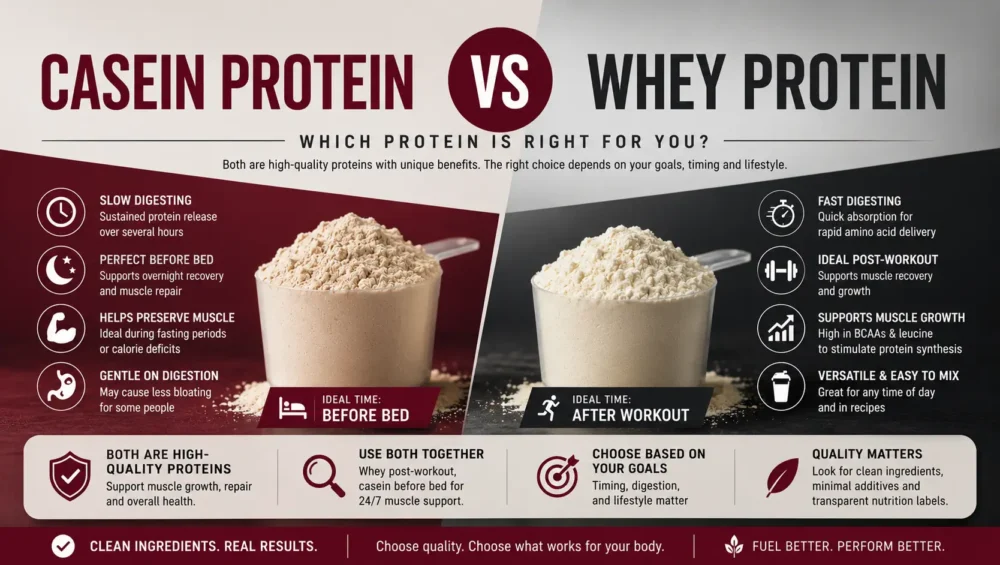
In simple terms:
- whey protein works fast
- casein protein works slowly
That single difference changes how each protein supports:
- muscle protein synthesis
- overnight recovery
- fat loss
- muscle preservation
- workout nutrition
This guide breaks down the science in a practical and easy-to-understand way while helping you choose the right protein for your goals.
You will learn:
- the real difference between whey and casein
- which protein is better for muscle gain
- how digestion speed affects recovery
- which protein is better for weight loss
- when to take whey or casein
- whether combining both works better
- the best whey and casein protein options in Australia
TL;DR:
- Whey protein digests rapidly and is best after workouts for fast muscle recovery and muscle protein synthesis.
- Casein protein digests slowly and is ideal before bed because it provides sustained amino acid release over several hours.
- Whey is generally better for immediate post-workout recovery and lean muscle growth.
- Casein is often better for satiety, overnight recovery, and appetite control.
- Both are complete protein sources and can be highly effective depending on your training goals and timing strategy.
What Is Whey Protein?
Whey protein is a fast-digesting dairy protein rich in essential amino acids and leucine, commonly used to support post-workout recovery, muscle repair, and lean muscle growth.
Whey is naturally separated from milk during the cheese-making process and is considered one of the highest-quality protein sources available due to its amino acid profile and digestibility. However, some users may experience mild protein side effects such as bloating or digestive discomfort, particularly when using lower-quality formulas with added fillers or excessive sweeteners.
Why Whey Protein Is Popular in Sports Nutrition
Whey protein has become one of the most widely researched sports supplements because it:
- absorbs quickly
- stimulates muscle protein synthesis efficiently
- contains high leucine content
- supports rapid recovery after training
Research consistently suggests whey protein stimulates muscle protein synthesis rapidly because of its fast digestion speed and strong leucine concentration.
This is why whey after workout remains one of the most common recovery strategies in strength training and bodybuilding.
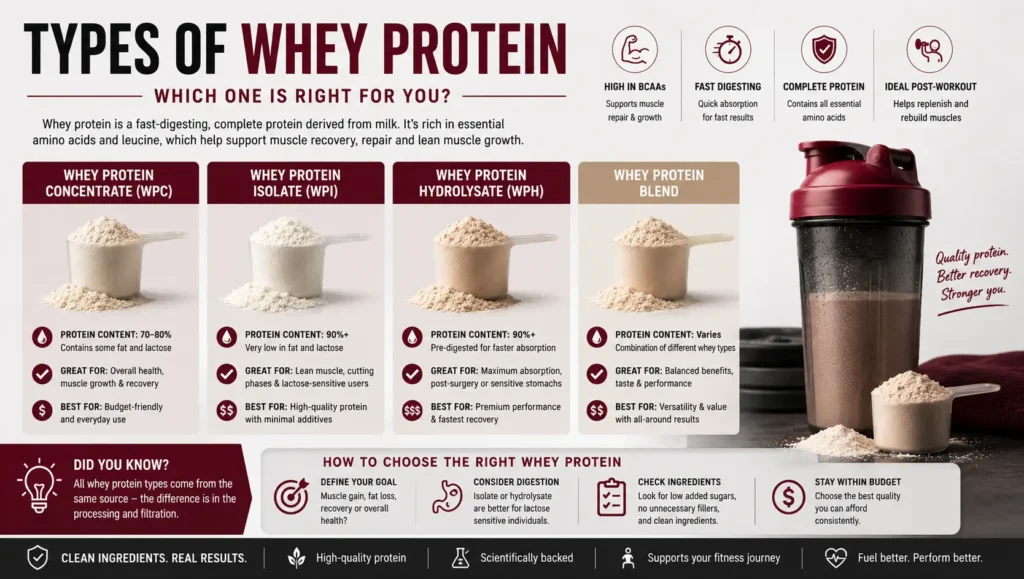
Types of Whey Protein
Whey Protein Concentrate
Whey concentrate is the least processed form of whey.
It typically contains:
- moderate protein concentration
- small amounts of fats and carbohydrates
- more lactose than isolate
Best For
- everyday protein supplementation
- muscle gain
- general recovery support
Practical Experience Insight
Many users find whey concentrate:
- creamier
- slightly more filling
- richer in flavour
then isolate formulas.
However, people sensitive to lactose sometimes report:
- bloating
- digestive discomfort
with lower-quality concentrate blends.
Whey Protein Isolate
Whey isolate undergoes additional filtration to remove more:
- lactose
- carbohydrates
- fats
This creates a leaner, faster-absorbing protein source.
Best For
- lean muscle growth
- cutting phases
- low-carb nutrition
- fast post-workout recovery
Real-World Observation
Athletes often prefer whey isolate during calorie deficits because it:
- feels lighter
- digests faster
- mixes thinner
- provides high protein with fewer calories
This is one reason whey isolate absorption is heavily valued in performance-focused nutrition.
What Is Casein Protein?
Casein protein is a slow-digesting dairy protein that provides a gradual release of amino acids over several hours.
Like whey, casein comes from milk. However, it behaves very differently during digestion.
When consumed, casein forms a thicker gel-like structure in the stomach, slowing digestion and amino acid release.
This sustained amino acid release makes casein popular for:
- overnight recovery
- appetite control
- muscle preservation
- meal replacement support
What Is Micellar Casein?
Micellar casein is the least processed and slowest-digesting form of casein protein.
Compared with whey protein, micellar casein:
- digests significantly slower
- increases satiety
- provides prolonged amino acid delivery
This is why casein before bed is one of the most common sports nutrition strategies for muscle recovery.
Casein Protein vs Whey: What’s the Main Difference?
Quick Comparison Table
| Whey Protein | Casein Protein |
| Fast digestion | Slow digestion |
| Rapid amino acid delivery | Sustained amino acid release |
| Best post workout | Best before bed |
| Supports immediate recovery | Supports overnight recovery |
| Lower satiety | Higher satiety |
| Lighter texture | Thicker texture |
The biggest difference between whey protein vs casein protein is digestion speed and how amino acids are delivered to your muscles.
Digestion Speed: Why It Matters
Protein digestion speed directly affects:
- recovery timing
- satiety
- amino acid availability
- muscle repair
Fast Digesting Protein and Muscle Recovery
Whey protein is rapidly absorbed, making it ideal immediately after training when muscles are most responsive to nutrient delivery.
Fast digesting protein helps:
- replenish amino acids quickly
- support muscle repair
- stimulate muscle protein synthesis
- accelerate post-workout recovery
Practical Gym Insight
Many gym-goers prefer whey immediately after training because:
- it feels lighter on the stomach
- it digests quickly
- it does not feel overly heavy after intense sessions
This becomes especially noticeable after:
- leg days
- endurance sessions
- high-volume hypertrophy workouts
Slow Digesting Protein and Overnight Recovery
Casein protein digests gradually over several hours.
This prolonged release may help:
- reduce overnight muscle breakdown
- support recovery during sleep
- increase fullness
- stabilise hunger between meals
Real-World Observation
Compared with whey isolate, casein protein:
- feels noticeably thicker
- keeps users fuller longer
- works better as a nighttime shake
Many athletes also report casein is more satisfying during cutting phases because of its appetite-control effect.
Protein Absorption Rates Explained Simply
Think of whey as a rapid recovery protein and casein as a sustained recovery protein.
- Whey acts quickly.
- Casein lasts longer.
Neither protein is universally better. The ideal choice depends on:
- timing
- recovery demands
- appetite goals
- training structure
Casein vs Whey Protein for Muscle Growth
One of the most debated questions in sports nutrition is whether whey or casein builds more muscle.
Whey Protein and Muscle Protein Synthesis
Whey protein contains high levels of leucine, the amino acid most responsible for triggering muscle protein synthesis.
This makes whey highly effective:
- after workouts
- around training sessions
- during muscle-building phases
Research suggests whey stimulates muscle protein synthesis more rapidly than casein because of its faster digestion and leucine availability.
Casein Protein and Anabolic Recovery Support
Casein still provides a complete amino acid profile and supports muscle growth effectively over time.
Its slower digestion helps:
- maintain amino acid availability longer
- reduce muscle protein breakdown
- support overnight anabolic recovery
This is why many physique athletes use both proteins strategically.
Which Protein Builds More Muscle?
The answer is not as simple as: ‘whey builds muscle’ or ‘casein builds muscle’.
In reality:
- whey excels in rapid recovery
- casein excels in prolonged recovery support
Most evidence suggests total daily protein intake remains more important than obsessing over one specific protein source.
For optimal recovery:
- whey is usually best post workout
- casein works best before bed
Casein vs Whey Protein for Weight Loss
Protein plays a major role in:
- appetite control
- satiety
- muscle retention
- calorie management
during fat-loss phases.
Which Protein Keeps You Fuller Longer?
Casein generally increases satiety more effectively because it digests more slowly.
This slower digestion may help:
- reduce hunger
- improve fullness
- support calorie adherence
This is why casein protein for weight loss is popular during cutting phases.
Whey Protein During Fat Loss
Whey isolate remains extremely popular for fat loss because it:
- delivers high protein
- contains fewer calories
- supports lean muscle retention
- recovers quickly after training
Practical Difference
Users often report:
- whey works better around workouts
- casein works better late at night when hunger increases
This is why combining both proteins often works extremely well during body recomposition phases.
Best Times to Use Whey Protein
Timing is not everything, but strategic timing can improve recovery efficiency.
1. After Workouts
The most effective use case for rapid muscle recovery.
2. In the Morning
Helps provide fast amino acid delivery after overnight fasting.
3. Between Meals
Supports total daily protein intake conveniently.
4. Around Training Sessions
Useful before or after workouts depending on recovery needs.
Best Time to Take Casein Protein
Casein timing is focused more on prolonged recovery support.
1. Before Bed
This is the most effective and researched application.
Protein for nighttime recovery helps support overnight muscle repair.
2. During Cutting Phases
Casein’s slower digestion may help reduce late-night hunger.
3. Between Long Gaps Without Food
Slow-release protein powder works well during busy schedules or travel.
4. Meal Replacement Support
Casein’s thicker texture makes it more filling than whey.
Casein vs Whey Protein for Different Goals
Best for Muscle Gain
Winner: Whey Protein
Why:
- rapid amino acid delivery
- strong leucine content
- superior post-workout recovery
Best for Overnight Recovery
Winner: Casein Protein
Why:
- sustained amino acid release
- slower digestion
- prolonged recovery support
Best for Appetite Control
Winner: Casein Protein
Why:
- increases fullness
- digests slowly
- supports satiety during dieting
Best for Lean Muscle and Cutting
Winner: Whey Isolate
Why:
- lower carb content
- lower fat
- rapid recovery support
Best Overall Strategy
For many athletes, the best approach is:
- whey during the day
- casein before bed
rather than treating whey vs casein protein as an either/or decision.
Can You Take Whey and Casein Together?
Yes and many high-quality protein blends already do this.
Combining whey and casein can provide:
- rapid amino acid delivery
- sustained recovery support
- improved satiety
- better all-day recovery nutrition
This is especially useful for:
- muscle gain phases
- busy schedules
- meal replacement shakes
Whey Concentrate vs Isolate vs Casein
| Protein Type | Best For |
| Whey Concentrate | General protein supplementation |
| Whey Isolate | Lean muscle and low lactose |
| Casein Protein | Overnight recovery and satiety |
How to Choose the Right Protein Powder
The best protein powder depends on:
- training style
- recovery demands
- digestion tolerance
- calorie goals
- timing preferences
Choose Based on Your Goal
Muscle Growth
Choose whey isolate or whey concentrate.
Overnight Recovery
Choose micellar casein.
Appetite Control
Casein generally works better.
Lean Muscle and Cutting
Whey isolate is often ideal.
Consider Digestion Tolerance
Some users tolerate whey isolate better because it contains less lactose.
Others prefer casein because it:
- feels more filling
- supports satiety longer
- works better during calorie deficits
Check Protein Per Serve
A quality recovery protein should generally provide:
- 20–30g protein
- complete amino acid profile
- minimal fillers
Watch for Added Sugars and Fillers
Many low-quality proteins contain:
- excessive sweeteners
- gums
- artificial flavouring
- unnecessary fillers
If you prefer cleaner ingredients and better ingredient transparency, choosing a protein powder without sweetener may be a better option for long-term daily supplementation.
Cleaner formulas often provide:
- better digestion
- less bloating
- more consistent daily use
Consider Texture and Mixability
Whey Protein
- lighter
- thinner
- easier to drink quickly
Casein Protein
- thicker
- creamier
- more filling
Texture preference matters more than many people expect.
Best Whey and Casein Protein Options in Australia
Australian consumers now have access to high-quality recovery-focused protein supplements designed for different goals.
Best Whey Isolate Option
Ideal for Lean Muscle and Post-Workout Recovery
Look for:
- high protein percentage
- low sugar
- minimal fillers
- easy digestion
- strong mixability
Best For
- post-workout recovery
- muscle growth
- lean body composition
Best Casein Protein Option
Ideal for Overnight Recovery and Appetite Control
Look for:
- micellar casein
- thicker consistency
- slow digestion
- minimal additives
Best For
- nighttime recovery
- satiety support
- cutting phases
Best Protein Blend Option
Ideal for All-Day Recovery
Protein blends combining:
- whey isolate
- whey concentrate
- casein protein
can support both:
- rapid recovery
- prolonged amino acid release
Common Mistakes When Comparing Whey and Casein
Assuming One Protein Is ‘Better’
The biggest mistake is thinking one protein completely replaces the other.
They serve different purposes.
Ignoring Total Daily Protein Intake
Consistent protein intake matters more than perfect supplement timing.
Using the Wrong Protein at the Wrong Time
Generally:
- whey works best around workouts
- casein works best before bed
Choosing Based Only on Marketing
Expensive branding does not automatically mean better recovery support.
Focus on:
- ingredient quality
- digestion
- protein content
- consistency
Frequently Asked Questions
Is casein better than whey protein?
Not necessarily. Whey is generally better for rapid recovery, while casein is better for sustained recovery and appetite control.
Can I take casein and whey together?
Yes. Combining both proteins can support both immediate and prolonged muscle recovery.
Which protein is better for weight loss?
Casein may improve satiety, while whey isolate works well for lean recovery during calorie deficits.
Is whey or casein better before bed?
Casein is generally better before bed because of its slower digestion speed.
Does casein build muscle slower than whey?
Casein digests more slowly, but it still supports muscle growth effectively over time.
What is micellar casein?
Micellar casein is the least processed and slowest-digesting form of casein protein.
Which protein digests faster?
Whey protein digests significantly faster than casein protein.
Can whey protein replace casein?
Whey can still support recovery effectively, but it does not provide the same sustained amino acid release as casein.
Which Protein Should You Choose?
The best choice between casein protein vs whey depends entirely on your:
- recovery goals
- training schedule
- appetite management
- digestion preference
- muscle-building strategy
If your priority is:
- rapid muscle recovery
- post-workout nutrition
- lean muscle growth
whey protein is usually the stronger option.
If your focus is:
- overnight recovery
- appetite control
- sustained amino acid release
- nighttime muscle support
then casein protein may suit you better.
For many athletes and gym-goers, the smartest strategy is not choosing one over the other but using both strategically at different times of the day.
At Nutri Peak, choosing the right recovery protein starts with understanding how your body responds to different digestion speeds, recovery demands, and training goals not simply following supplement trends.
