
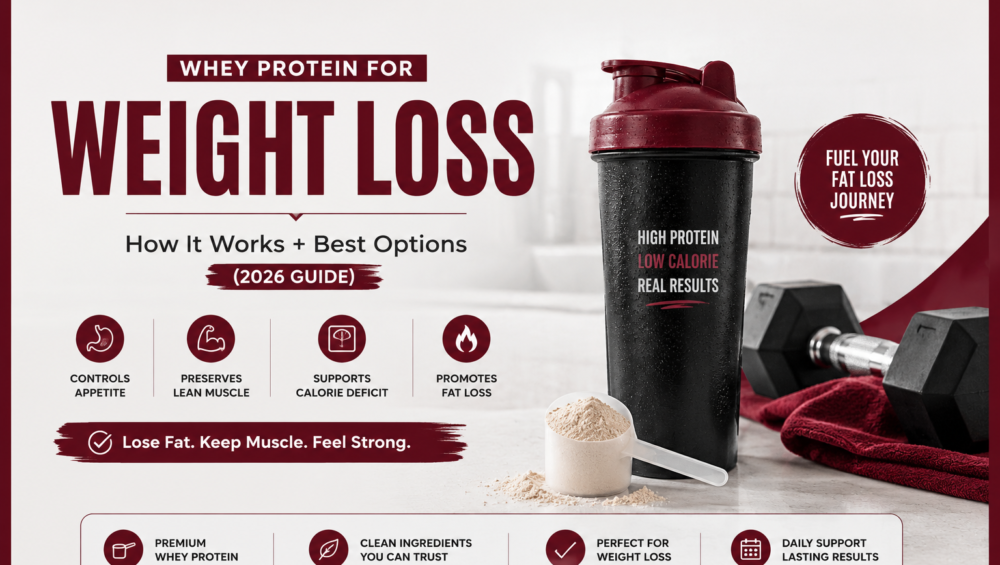
If your goal is to lose fat without losing muscle, whey protein is one of the most effective tools you can use.
A high-quality whey protein for weight loss helps you:
- Stay full longer
- Preserve lean muscle
- Maintain a calorie deficit without extreme dieting
And when used correctly, it can significantly improve fat loss results compared to low-protein diets.
What Is Whey Protein for Weight Loss?
Whey protein for weight loss is a fast-digesting, high-protein supplement that supports fat loss by increasing satiety, preserving lean muscle, and helping maintain a calorie deficit.
Unlike fat burners, whey protein doesn’t “burn fat” directly it creates the optimal conditions for sustainable fat loss.
Is Whey Protein Good for Weight Loss?
Yes, whey protein is one of the most effective supplements for fat loss.
Quick answer:
- Reduces hunger and cravings
- Helps maintain muscle during weight loss
- Makes calorie control easier
Research consistently shows high-protein diets lead to better fat loss and muscle retention compared to standard diets.
How Whey Protein Helps You Lose Weight
1. Controls Appetite (Satiety Effect)
Protein increases fullness hormones and reduces hunger hormones.
This means:
- Fewer cravings
- Less snacking
- Easier calorie control
2. Preserves Lean Muscle
When you lose weight, your body can burn both fat and muscle.
Whey protein helps:
- Protect muscle mass
- Maintain metabolism
- Improve body composition
3. Supports a Calorie Deficit
Fat loss only happens in a calorie deficit.
Whey protein makes this easier by:
- Replacing high-calorie foods
- Increasing protein without excess calories
4. Increases Thermic Effect (Bonus Fat Loss)
Protein requires more energy to digest than carbs or fats.
This is called the thermic effect of food (TEF) and it slightly increases daily calorie burn.
Whey Protein Isolate vs Concentrate for Weight Loss
Whey isolate vs concentrate for weight loss:
- Whey Isolate: Higher protein, lower calories → best for fat loss
- Whey Concentrate: More affordable but higher in carbs and fats
| Feature | Whey Isolate | Whey Concentrate |
| Protein | 90%+ | 70–80% |
| Calories | Lower | Higher |
| Lactose | Very low | Moderate |
Best choice: Whey Protein Isolate
Best Whey Protein for Weight Loss (Top Picks)
This is where results and conversions happen.
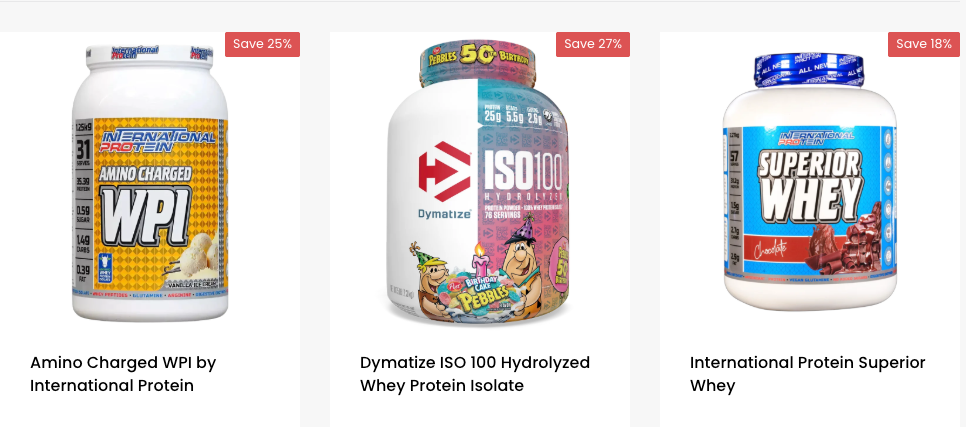
Best Clean Option: International Protein Superior Whey
A clean, low-carb whey isolate designed for lean muscle and fat loss.
Why it works:
- High protein per serving
- Minimal fillers and sugars
- Easy digestion
Best for: Cutting phases, calorie deficits, and clean nutrition
Best for Fat Loss Efficiency: Whey Protein Isolate
- Maximum protein per calorie
- Low carbs and fats
- Ideal for aggressive fat loss
Best for Daily Consistency: Flavoured Whey Protein
- Better taste = higher adherence
- Makes it easier to stay consistent
Shop low-calorie whey protein for fat loss:
What to Look for in the Best Whey Protein for Weight Loss
Choosing the right protein determines your results.
1. High Protein per Serving
Aim for 20–30g protein per scoop
2. Low Calories & Carbs
Essential for maintaining a calorie deficit
3. Clean Ingredients
Avoid:
- Added sugars
- Fillers
- Artificial additives
4. Easy Digestion
If you experience bloating:
Choose whey isolate (low lactose)
Quick Buying Guide
- Fat loss → Whey isolate
- Budget → Whey concentrate
- Sensitive digestion → Low lactose isolate
- Daily use → Flavoured whey
How to Use Whey Protein for Weight Loss (Step-by-Step)
1. Calculate your protein intake
Target: 1.6–2.2g per kg body weight
2. Replace high-calorie snacks
Swap chips or sweets with a protein shake
3. Use post-workout
Supports recovery and muscle retention
4. Stay in a calorie deficit
This is the most important factor
Best Time to Take Whey Protein for Weight Loss
- Post-workout: Muscle recovery + fat loss support
- Morning: Reduces hunger throughout the day
- Between meals: Prevents overeating
Timing helps but total daily protein intake matters most
How Much Whey Protein Do You Need?
For fat loss:
- 1.6–2.2g protein per kg body weight daily
Example:
If you weigh 70kg:
- You need 112–154g protein/day
Whey protein helps you hit this target easily without excess calories.
Whey Protein vs Other Weight Loss Supplements
Whey Protein vs Fat Burners
- Whey = sustainable fat loss
- Fat burners = short-term, minimal impact
Whey Protein vs Meal Replacements
- Whey = flexible, high protein
- Meal replacements = often higher calorie
Whey Protein vs Plant Protein
- Whey = faster absorption, better muscle retention
- Plant protein = alternative for dairy-free diets
Who Should Use Whey Protein for Weight Loss?
Whey protein is ideal for:
- People trying to lose fat without losing muscle
- Busy individuals who struggle with meal prep
- Gym-goers in a cutting phase
- Anyone on a high-protein diet
Common Mistakes to Avoid
- Using whey protein without a calorie deficit
- Choosing high-sugar protein powders
- Overconsuming shakes (extra calories)
- Ignoring total daily protein intake
Does Whey Protein Burn Fat?
Whey protein does not directly burn fat.
Instead, it:
- Reduces hunger
- Supports muscle retention
- Helps maintain a calorie deficit
These are the key drivers of fat loss.
Should You Use Whey Protein for Weight Loss?
If your goal is sustainable fat loss, whey protein is one of the smartest supplements you can use.
It helps you:
- Stay full longer
- Maintain lean muscle
- Stick to your calorie target
Start Your Fat Loss Journey with Nutri Peak
Browse high-quality whey protein:
https://nutripeak.com.au/
FAQs
Can whey protein help you lose weight?
Yes. It reduces hunger, preserves muscle, and supports a calorie deficit.
What is the best whey protein for weight loss?
Whey protein isolate due to its high protein and low calorie content.
When should I take whey protein for weight loss?
Post-workout or between meals to control hunger and support recovery.
How many protein shakes per day?
1-2 shakes depending on your daily protein needs.
Can whey protein cause weight gain?
Only if you consume more calories than you burn.
Can you take whey protein without working out?
Yes, but it’s most effective when combined with exercise.
